
Bee Bread vs Bee Pollen: The Critical Difference You Need to Know
- Jan 20
- 5 min read
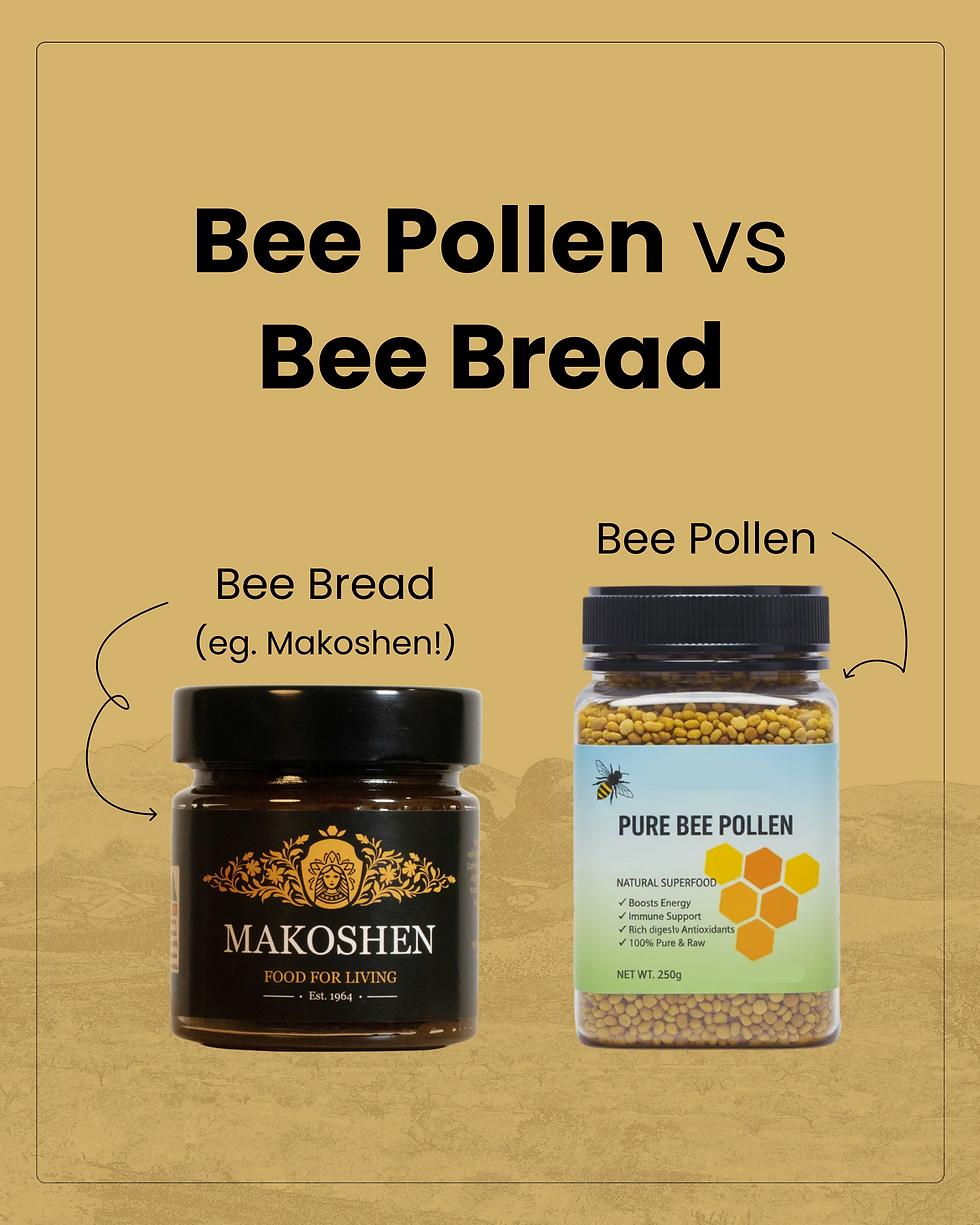
If you’ve started exploring the world of natural superfoods, you’ve probably seen bee pollen granules cropping up in health food shops across Australia. But now, there’s another hive product on the scene: bee bread. They look similar, they both come from bees, and they’re both meant to be good for you. So, what’s the difference?
It’s the most common question we get, and the answer is the single most important thing to understand about hive nutrition. While they start from the same place, the bee bread vs bee pollen debate comes down to one critical process: fermentation.
In short, one is a raw ingredient, and the other is a finished, bioavailable superfood. Understanding this difference is the key to unlocking the real power of the hive.
First, What Is Bee Pollen?
Let’s start with the raw material. Bee pollen is the collection of pollen grains that foraging bees bring back to the hive. Beekeepers collect it by placing a "pollen trap" at the hive entrance, which gently scrapes the pollen "baskets" off the bees' legs as they enter.
The Problem with Raw Pollen
Raw bee pollen is undeniably packed with nutrients. It has protein, vitamins, and minerals. However, it has one massive drawback: a tough, indigestible outer shell.
This protective shell, known as the exine, is one of the most durable substances in the natural world. It’s designed to protect the pollen on its journey from one flower to another. Unfortunately, this same shell makes it incredibly difficult for the human digestive system to break down.
Think of it like trying to eat a whole, uncracked walnut or macadamia nut. All the nutrition is sealed inside a hard, durable shell. Even though the nutrients are present, your body struggles to access them, and the hard shell passes right through your system, unabsorbed. The body has to break through that barrier to get to the goodness—and with raw pollen, that barrier is extremely tough.
So, What Is Bee Bread (Perga)?
Bee bread is what the bees create after they collect the pollen. It is their actual food, their pantry staple, and the "bread" that feeds the entire colony.
The bees take the raw pollen, mix it with nectar and their own unique salivary enzymes, and pack it tightly into a honeycomb cell. They then seal it with a drop of honey. Inside this dark, protected cell, a magical transformation begins.
The mixture undergoes a natural lactic acid fermentation. This process, similar to making kimchi, sauerkraut, or yogurt, completely changes the pollen's composition.
This natural fermentation:
Cracks the Shell: It completely breaks down the tough exine shell, making 100% of the nutrients inside instantly accessible.
Unlocks Nutrients: It pre-digests the proteins and carbohydrates, converting them into more readily usable forms (like amino acids).
Creates New Compounds: This natural process creates a whole new range of beneficial compounds, including natural enzymes, probiotics, and Vitamin K, which are not found in raw pollen.
If bee pollen is the raw seed, bee bread is the fully sprouted, living plant: a fermented, enzymatically-active, and highly digestible superfood.
The Showdown: Bee Bread vs Bee Pollen at a Glance
For a quick summary, here’s a simple breakdown of the bee bread vs bee pollen comparison.
Feature | Bee Pollen (Raw) | Bee Bread (Fermented) |
Form | Raw, unprocessed pollen | Fermented, enzyme-rich pollen |
Outer Shell | Intact and very tough | Broken down and pre-digested |
Digestibility | Very low | Very high |
Nutrient Access | Poor-to-fair bioavailability | Excellent bioavailability |
Gut Health | No (can be hard to digest) | Yes (rich in enzymes & probiotics) |
Vitamin K | None | Contains Vitamin K (from fermentation) |
Taste & Texture | Often chalky, dry, can be bitter | Soft, tangy, slightly sweet, complex |
How It's Made | Collected by beekeeper's trap | Made & fermented by the bees |
Analogy | A raw, hard seed | A living, sprouted plant |
Why Bioavailability is the Real Game-Changer
This is the key takeaway. You've probably heard the saying, "You aren't what you eat; you are what you absorb." This is the core of the bee bread vs bee pollen issue.
You can swallow a spoonful of raw pollen that is technically chock-full of nutrients, but if your body can't break it down, it’s a waste. You've paid for nutrition that your body simply can't access.
With bee bread, the bees have done all the hard work for you. The fermentation unlocks these nutrients, making them "bioavailable", ready for your body to absorb and use immediately. This means you get more nutritional power from a smaller serving.
When you choose bee bread, you are choosing absorption.
Taste, Texture, and How to Use Them
The differences don't stop at nutrition. They are also completely different to eat.
Bee Pollen
Raw bee pollen granules are often dry, chalky, and can have a bitter or "dusty" floral taste. Because of the tough shell, many experts recommend you grind it into a powder or soak it in water for several hours before consuming it to try and improve its digestibility. For many, this is an extra hassle that makes it hard to stick with.
Bee Bread
In its most common consumer form, bee bread (or fermented pollen) is softer, less chalky, and slightly moist compared to raw pollen granules. The taste is unique and generally delicious—a complex mix of tangy, sour, and sweet notes, often described as a floral-infused fruit leather or a natural probiotic treat. It's largely ready to eat, requiring no preparation to unlock its nutrition.
Makoshen: The Premium Spread

Makoshen Bee Bread takes the superior qualities of fermented bee bread and elevates them. Since it is never dried (unlike common granules), it retains all its natural moisture and potency, resulting in a rich, buttery spread texture.
Here is how to enjoy this premium form:
Eat it Straight (Recommended): Scoop a teaspoon directly from the jar for a quick boost and maximum bioavailability.
Morning Brekkie Topping: Dollop the spread onto your yogurt, muesli, or oats.
Smoothie Boost: Add it to a smoothie (after blending to protect the live enzymes).
Versatile Mixer: Use the spread to bind homemade energy bites or stir into a fruit compote.
The Final Verdict: Why Bee Bread is the Clear Winner
So, when it comes to bee bread vs bee pollen, is there a clear winner? We think it's a no-brainer.
Raw bee pollen is a promising ingredient, but it’s an unfinished product that asks your body to do a job it isn't equipped for.
Bee bread is the finished masterpiece, optimised by nature's own wisdom. The bees, in their genius, created a food that is perfectly fermented, pre-digested, and packed with bioavailable nutrients.
When you choose Makoshen Bee Bread, you are choosing a smarter, more powerful, and more digestible food. You’re choosing to get the full, uncompromised power of the hive, just as the bees intended.
Ready to upgrade from pollen? Shop our 100% Raw, Fermented, and Ethically Harvested Makoshen Bee Bread.


Comments