
What is Bee Bread? The Fermented Superfood You’ve Never Heard Of
- Dec 8, 2025
- 5 min read
Updated: Jan 31
When talking about bee products, honey gets all the glory, and bee pollen has gained fame as a health food. But there is a third, more powerful treasure inside the hive, one that the bees themselves rely on for their survival. It’s called bee bread.
So, what is bee bread? In short, it’s not bread at all. It is a completely natural, fermented superfood created by bees. They skilfully combine bee pollen, nectar, and their own enzyme-rich saliva, pack it into a honeycomb cell, and seal it with a drop of honey.
This mixture then undergoes a natural lactic acid fermentation, similar to how yogurt or sauerkraut is made. This process transforms the raw pollen into "perga" or bee bread: a pre-digested, nutrient-dense, and highly bioavailable food that is the primary source of protein and vitamins for the colony.
Furthermore, this fermentation is precisely what makes bee bread so special for humans, unlocking a full spectrum of nutrients that are difficult to access in raw pollen.
How Do Bees Make Bee Bread? The Magic of Fermentation
This precise, multi-stage, alchemical creation is the incredible natural process that transforms plain pollen into bee bread. This isn't a simple mixture; it's a profound biological advancement.
Step 1: Collection Foraging bees fly from flower to flower, collecting pollen in "baskets" on their legs. They mix this pollen with a small amount of nectar to make it stick together.
Step 2: Packing Back at the hive, the forager passes this pollen mixture to a hive bee. This bee meticulously packs the pollen into an empty honeycomb cell, pushing it down to remove all the air.
Step 3: The Transformation The bee then adds more nectar and its own unique salivary enzymes. These enzymes are the "starter culture" that kicks off the entire transformation.
Step 4: Fermentation Finally, the cell is sealed with a cap of honey. Protected from air and light, the mixture begins to ferment. This natural lactic acid fermentation breaks down the hard outer shell of the pollen, neutralizes anti-nutrients, and creates a powerhouse of new, bioavailable compounds, including beneficial enzymes, B-vitamins, and vitamin K.
As a result, what was once just raw pollen becomes a living food, perfectly preserved and packed with everything the bees need to thrive.

Why Bee Bread is Vital and How it is Harvested Ethically
Bee bread is the colony's lifeline, but its extraction is a sustainable practice and a form of essential hive maintenance. Over time, the beeswax honeycomb naturally becomes saturated with propolis, shed bee casings, and layers of pollen and bee bread. Once a comb frame is deemed too old, dark, and heavy with these elements, it becomes less sanitary and efficient for the bees to use. Beekeepers then extract these aged combs, which cannot be easily "recycled" by the bees themselves. In this way, the beekeeper acts as a "cleaner" and "recycler," utilizing the dense, nutrient-rich bee bread while encouraging the bees to build fresh, clean comb, ensuring the long-term health and vitality of the hive.
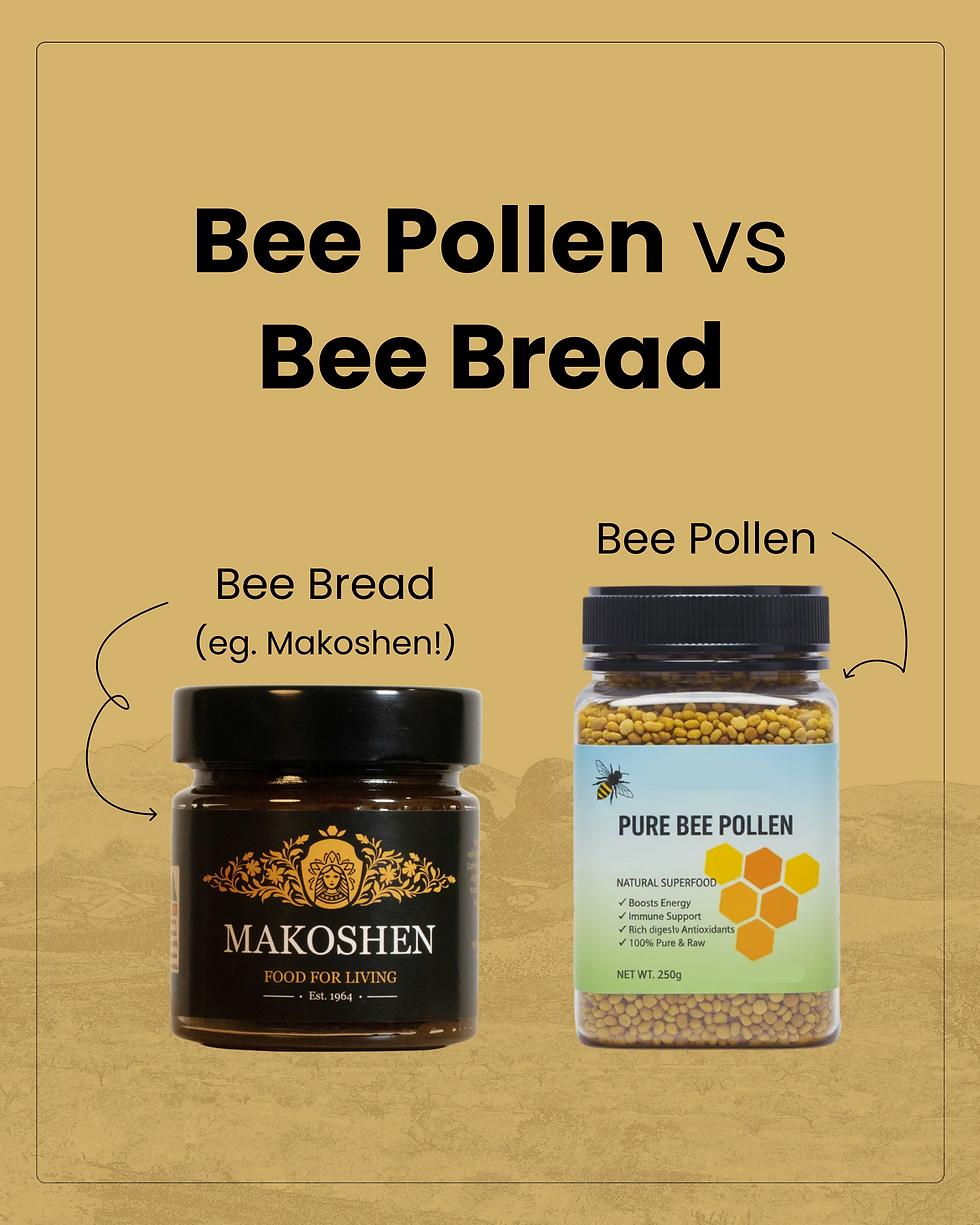
The Big Question: Bee Bread vs. Bee Pollen
This is the most important distinction to understand. While often confused, bee bread and bee pollen are vastly different products in terms of their nutritional value for humans.
Bee Pollen: The Raw Ingredient
Bee pollen is the raw, unprocessed pollen collected from bees as they enter the hive. While it is nutritious, it has a major drawback: every grain of pollen is protected by a very tough outer shell called an exine.
This shell is incredibly difficult for the human digestive system to break down. This means that even if you eat raw pollen, you may not be absorbing all the valuable nutrients locked inside.
Bee Bread: The Bioavailable Solution
Bee bread is the finished product. The bees' fermentation process does all the hard work for us. The lactic acid and enzymes completely break down that tough exine shell, effectively "pre-digesting" the pollen.
Think of it like this: raw pollen is like raw milk, a natural product that can be difficult for some bodies to process. Bee bread is the Kefir or Yogurt, where natural, beneficial cultures—the lactic acid bacteria—have pre-digested the complex parts, making the nutrients immediately accessible. Studies suggest the nutrients in bee bread can be up to 90% more bioavailable, meaning your body can actually absorb and use them.
What Are the Key Benefits of Bee Bread?
Because it is fermented and pre-digested, bee bread provides a range of benefits that go far beyond raw pollen. Its unique composition makes it one of nature's most complete superfoods.
A Natural Digestive & Gut Health Powerhouse
The fermentation process makes bee bread rich in naturally occurring enzymes and beneficial compounds. This can help support your own digestive system and promote a healthy gut microbiome, which is essential for overall health.
A Complete Nutritional Profile
Bee bread is a true nutritional powerhouse. It is packed with:
Complete Proteins: It contains all 22 essential amino acids, making it a complete protein source.
B-Vitamins: It's an incredible source of B-group vitamins, especially B12, which are crucial for creating energy.
Minerals: It delivers easily absorbed minerals like zinc, selenium, iron, and magnesium.
Antioxidants: It has a high concentration of antioxidants that help fight free radicals and reduce oxidative stress.
Natural Energy & Immune Support
The combination of dense B-vitamins and bioavailable protein makes bee bread a fantastic source of natural, sustained energy without the crash of sugar or caffeine. For instance, many athletes use it for endurance and recovery.
At the same time, the rich blend of zinc, selenium, and other antioxidants provides powerful support for a robust and healthy immune system.
How to Eat Bee Bread (And What Does It Taste Like?)
One of the best things about bee bread is how easy it is to use. First, many people are surprised by its taste. Unlike the sometimes-chalky taste of pollen, bee bread has a pleasant, slightly tangy and sweet flavour, with complex floral notes.
For most adults, a daily serving of one teaspoon is all you need.
Common Ways (With a Crucial Distinction)
The majority of consumer-grade bee bread on the market is sold as dry, hard pellets or granules, often mixed into food. This dry form loses moisture and some of the delicate enzymes that make the spread so powerful.
In Smoothies, Yogurt, or Salads: The suggestions below are popular ways to consume the common dry, pellet type of bee bread. If you are using that form, you can add it to smoothies, sprinkle it on yogurt, oatmeal, or even use it on salads for a healthy crunch
Our Recommendation: Straight Up: Given the high concentration of enzymes and beneficial moisture in our premium, un-dried bee bread spread, we recommend taking a teaspoon directly as a supplement each morning to maximize absorption and the full probiotic effect.
The Makoshen Difference: A History of Purity
Our approach to bee bread is built on generations of family tradition, ensuring a final product that is superior to the mass-produced dried pellets.
While commercial processes often rush production and use high-heat drying to create the shelf-stable granules you find everywhere, the Makoshen Difference focuses on preservation, not processing. We meticulously hand-extract the bee bread from the pristine comb and immediately package it to preserve the original, moist, enzyme-rich spread—exactly as the bees made it. This family commitment to purity and minimal handling is why our product retains its potent, bioavailable properties, delivering a quality you can taste and feel.
Your New Wellness Staple
So, what is bee bread? It’s far more than just a supplement. It is a potent, fermented, and ancient food crafted by nature's most skilled alchemists. It is the bioavailable, easy-to-digest, and nutritionally complete upgrade to bee pollen.
When you incorporate bee bread into your diet, you are not just trying a new health trend; you are consuming the very food that has fuelled bee colonies, one of nature's most complex and successful societies, for millions of years.
Ready to experience the real food of the bees? Explore our 100% pure, raw, and ethically harvested Makoshen Bee Bread today!


Comments